For this blog post, explore the website Oppressed Brown Girl Doing Things. Look at the images, read the posts and comments, watch the videos and think about the prevailing images that are produced by the media (and your own brain) about women who live in these parts of the world. Then, once you think you have fully explored the site, answer the following questions: 1) What do you think of the site's name and what does is it trying to convey? 2) What prevailing stereotypes about women of color, veiled women specifically is the site trying to counter? 3) Do you think the site is successful in providing a counter-narrative to these stereotypes?
Your comment must be at least two paragraphs long and must be posted on Tuesday, April 15th by 5:00 pm to receive credit.
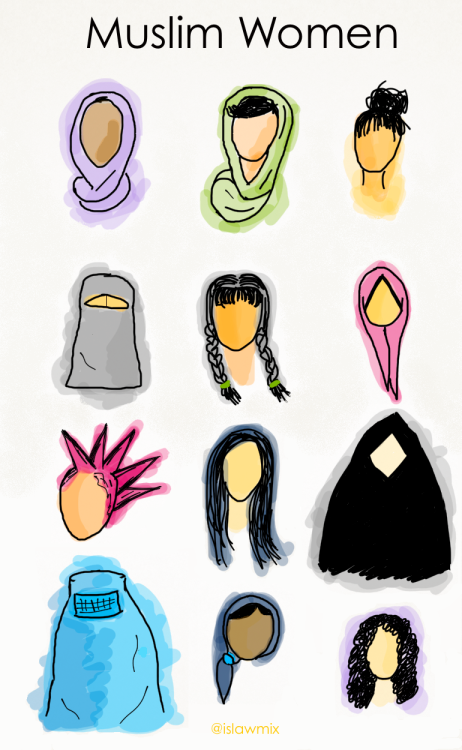


It is clear to me that the title of the blog is trying to challenge the stereotypes about women in non-western cultures. I say non-western cultures because the page also addresses objectification of Latina women, tells the story of Native American Grandma’s fighting white supremacy in North Dakota, and even includes a funny GIF of an African American woman criticizing the “nude” bras created by manufacturers. The main focus is clearly on Middle Eastern women, especially those who wear veils for cultural or religious purposes. The most impactful posts are those of these veiled women “doing things.” Amazing things. Kalpana Chalwa was an incredible astronaut. Another story talked about Noor Inayat Khan, dubbed “Spy Princess” for all the insane missions she accomplished amazing courage she showed. And of course there is the stunning strip of photos of the Afghan women with a variety of talents, including acting, rowing, singing, lifting, piloting, and even performing martial arts. All these amazing talents and accomplishments are the “things” in the title. The “Oppressed Brown Girls” part is the directly stated stereotype that western culture believes to be true of women of color. The title in itself is a battle between these two parts.
ReplyDeleteI believe the site is very successful in providing a counter-narrative to the stereotype that all women who wear a veil are oppressed. Especially after reading Persepolis, I think I personally had an image that a veil meant a woman was either an extreme fundamentalist or forced to wear the veil against their will (see page 75 of Persepolis). It’s not like I don’t know Muslim women who wear veils, but because they are in the same context as me, in a western culture, neither of those stereotypes crossed my mind. This blog clearly states that just because a woman wearing a veil or of dark skin color does not live in a western country does not mean that she is oppressed and cannot do things, and I am really thankful someone created it.
The site’s name “Oppressed Brown Girls Doing Things” refers to how women of color are generally viewed as poor, uneducated, and oppressed as a group by the Western world. The author clearly finds this idea to be ridiculous, and purposely selects content from the Internet to re-blog in order to show that despite stereotypes, there are women who are successful, beautiful, powerful, and enjoy freedom whose superficial appearance does not necessarily match Western expectations. Through the variety of posts, the author has collected the stories and experiences of women of color that captures the challenges they face and nuances that the average American many not realize exist.
ReplyDeleteSome people consider the veil as a sign of oppression and backwardness, especially since the Western world has become acceptable for women to wear less clothing and to show more skin. By covering one’s head, somehow this is equated directly with being oppressed. While forcing women to wear the veil against their wishes is oppression, simply wearing a veil may be an act of religious expression. Also, the religious and traditional aspect of the veil is associated with women being unable to take part in modern activities. This blog shows numerous photos featuring women in veils participating in athletic events: soccer, basketball, track, rowing, and weightlifting. A woman that can lift weights? You know she’s tough— she’s strong. And she’s wearing a veil. By showing these women actively participating in sports, the construct that all women wearing veils are passive and oppressed begins to crumble away. Another image that is striking depicts two veiled women at a university. Clearly, they are not without education.
It’s actually quite ironic, because when women of color do wear less clothing, it is taken as a sign of sexual promiscuity and can welcome unwanted attention. The blog mentions one particularly damaging stereotype of the “fast-tail” girls where black women are hyper-sexualized, often when they are young girls going through puberty. Based on the way that these young girls dress and act, they are perceived to be “asking for it” and are otherwise blamed for the misconduct of men. This post is important because it explores how damaging certain stereotypes can be, especially since women who experience abuse will under report their experiences to avoid being stereotyped.
This site not only provides many counter-narratives to stereotypes, but it also contains posts that explore the ongoing struggles that women of color face as a result of racism. It is successful because it shows that women who wear veils cannot be put in one box and written off as less enlightened than Western women. It shows the private lives of women in Saudi Arabia behind closed doors as individuals as they have their portraits taken. Women of color can be astronauts, athletes, leaders, and fighters against injustices. “Oppressed” brown girls do not sit around feeling sorry, they are out doing things.
Side note: Viewing the blog reminded me of this political cartoon. It seemed relevant to the current discussion. http://37.media.tumblr.com/e7b298687048a1f58cd2479dcaa24788/tumblr_mf4n5rr7wt1r5r1alo1_1280.jpg
The title of the blog is very specific yet broad to interpretation. I say this because of the word "things" in the title, in itself the word is so broad that one can wonder if its doings things to resist the oppression or doing things as the blog is trying to express. The specificity part of the title "Oppressed brown girls" not only unites and creates sameness from a societal generated difference of what a brown girl is. To be clear, a brown girl can be the stereotypical images that are framed towards Orientals and Latin America, or it can be the individual that identifies herself as "brown." The blog post is trying to portray the counter idealism of the “East” as opposed to what is generally depicted in the media in the Western regions of the world. The western’s image of the Oriental girl/woman is one of oppression that is headed by one main “ icon” –the veil. The site provides insight to the veil as a symbol not of oppression but of choice, religious or cultural. It is because of the striking images, that I, at least, am not accustomed to seeing that makes the site VERY successful. This blog post shows also a side the U.S. specially is fond of ignoring. How we wish to ‘fix’ the problems of oppressed woman in other countries and ignore that here in United States soil we are reinforcing the stereotypes through media, attitude, and ignorance. In example, as the blog post of the girl whose name is Tasbeeh and they end up calling her Alex. The blog post is very successful beginning with the title.
ReplyDeleteThe Tumblr blog Oppressed Brown Girls Doing Things strives to challenge existing stereotypical images of brown women, primarily through the use of satire, humor and references to historical figures. The site aims to counter the assumptions that all brown women are victims of oppressive regimes (both politically and socially) who must be rescued by the liberating West. Some particularly prominent images include the stereotype of Muslim women ‘forced’ to veil or don the hijab, women who have their rights taken from them by the patriarchy, subjected to the abuse of masculine powers or terrifyingly fundamental, ‘backwards’ religions, and women who are fetishized into exotic, sexualized objects of desire.
ReplyDeleteThe blog aims to counter these said images, which are seemingly etched into the minds of the ‘West’ as a consequence of framed narrative and limited representations in the media. For one, the name of the site is in itself a sarcastic statement that sums up the blog’s content. The first part, Oppressed Brown Girls, is an ironic play on how reality is distinctly different from how people imagine it to be. The figures shown in the blog are far from oppressed, as they are celebrated for their independence, confidence and autonomy. They are often inspiring figures who, quite the opposite of what people may assume, make their own choices in life, whether they pertain to religious beliefs or vocational choices. This ties in quite well with the second part, doing things, which is also sarcastic considering that ‘doing things’ is an obvious understatement. The figures featured in the blog range from university students to models, from musicians to astronauts, and from athletes to pilots. Far from simply performing daily actions ‘just like other people’, many people shown in the blog are national heroes and figures who people look up to. Indeed, much like what we discussed in class about the text Persepolis, this blog can be thought as a humanist project – through these numerous examples, people who were once limited to certain specific depictions of brown women would hopefully broaden their perspectives to realize that so much more exists beyond the stereotypes. Not only can brown women be ‘just like others’, living normal lives with their family while making personal choices in their own volition, but they are also more than capable of being independent individuals who constantly challenge themselves and aspire others in life. All in all, given that it shows such a wide variety of inspiring (and often, heartfelt) stories and portrayals of brown women, I think that the site has successfully provided a counter-narrative to said stereotypes.
The title “Oppressed brown girls doing things” is very successful in what I believe the blog is trying to represent. According to the blog, there is a “misunderstanding that all women are oppressed and the title just shows the direct opposite of this. Read simply, the title clearly conveys evidence of ‘oppressed’ women actually doing things that the general public believes they do not or not able to. By scrolling through the blog even further, we can clearly see what prevailing stereotypes about women of color that the site is attempting to counter. The picture that really got my attention was that of a veiled women power lifting at the gym. This picture clearly shows us that it is going against the prevailing stereotype that women mustn’t be at the gym, especially lifting weights. Power lifting is perceived by most of the world as an activity for men, but this picture clearly shows us a veiled woman “doing things” going against several preconceived stereotypes that people have. This picture is extremely powerful in attempting to break stereotypes that some of the general population may have. The blog also introduces prevailing stereotypes of women of color being astronauts, writers, artists, and humanitarians.
ReplyDeleteFurthermore, I believe that the site is successful in providing a counter-narrative to these stereotypes. Through the use of pictures, poems, article reviews, and narratives the blog introduces counters to these stereotypes in a plethora of different ways. I felt as if the pictures proved to be the most influential counter to these stereotypes as they provided physical evidence of ‘oppressed’ women doing things that they were thought not to have the capability to do. The blogs somewhat satirical approach also helps conveys the authors point to show colored women do not all fall victim to the ‘western’ idea of oppression.
-Somil Chheda
Oppressed Brown Girls Doing Things is a very powerful tumblr blog with a title that commands attention. The name “Oppressed Brown Girls Doing Things” is striking because it is a bold title that most people would refrain from using. However, the woman who made this blog seems extremely confident in her beliefs and is readily able to show her pride as being a colored woman who is not oppressed, but rather playing sports, becoming a pilot, modeling, etc. The site is convincing people that colored women are not oppressed and that they are doing things around the world that would put many people to shame. The woman who made this blog is tired of being considered oppressed and wants to be viewed as an equal and someone who is taking strides to becoming something important in the world.
ReplyDeleteThe site is trying to dismiss the idea that veiled, colored women are locked inside and forced into an oppressive society, simply because this is not the case. Western stereotypes of colored women are typically that they have less freedom and fall under the rule of dictatorship. Specifically veiled women are almost always categorized as being oppressed, not because they necessarily are but because Western culture has formed the idea that any woman who is required to wear a veil must be oppressed. This is a false assumption because there are a significant amount of colored women who choose to wear a veil on their own.
I think this site is successful in providing a counter-narrative to these stereotypes because it is incredibly blunt and is very powerful because it expresses an unspoken concern amongst colored women. The power of the site lays in the fact that this woman is fully aware that people view her as being oppressed, but she is willing to take a stance in order to prove such assumptions wrong with visual images, videos, poems, and articles. The power of the site also has to do with the fact that it is coming directly from the source of the so-called “oppressed” women. They are first-handedly arguing against such assumptions because they know that as colored women they have the freedom to do things that other women do as well